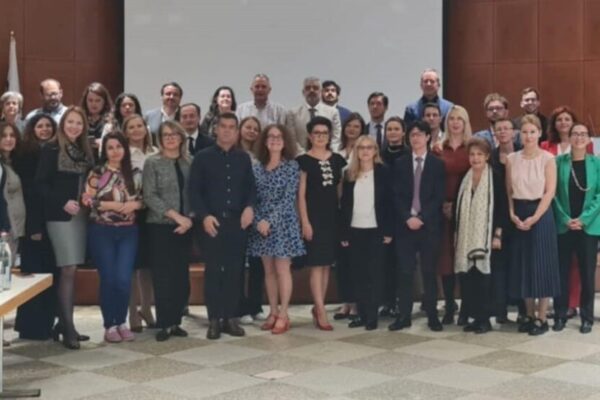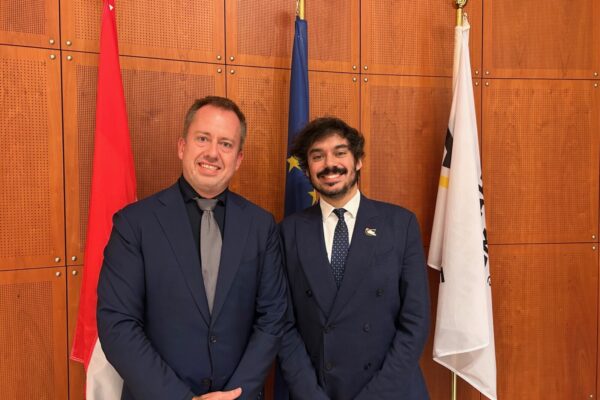

The UEHJ, represented by Duarte Pinto, member of the executive committee, and the UIHJ, represented by Patrick Gielen, secretary general, participated in the last interprofessional conference of the EU-co-funded e-FILIT project, followed by the project’s closing conference.
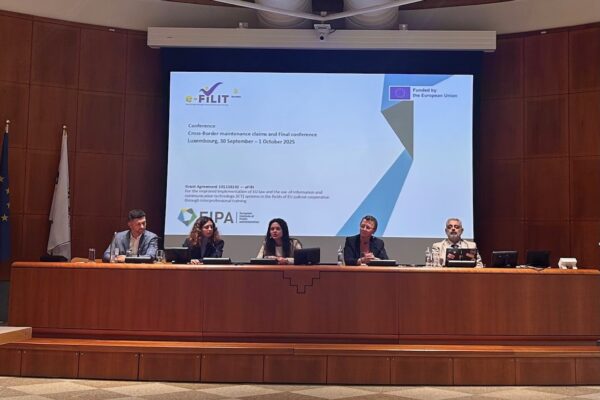
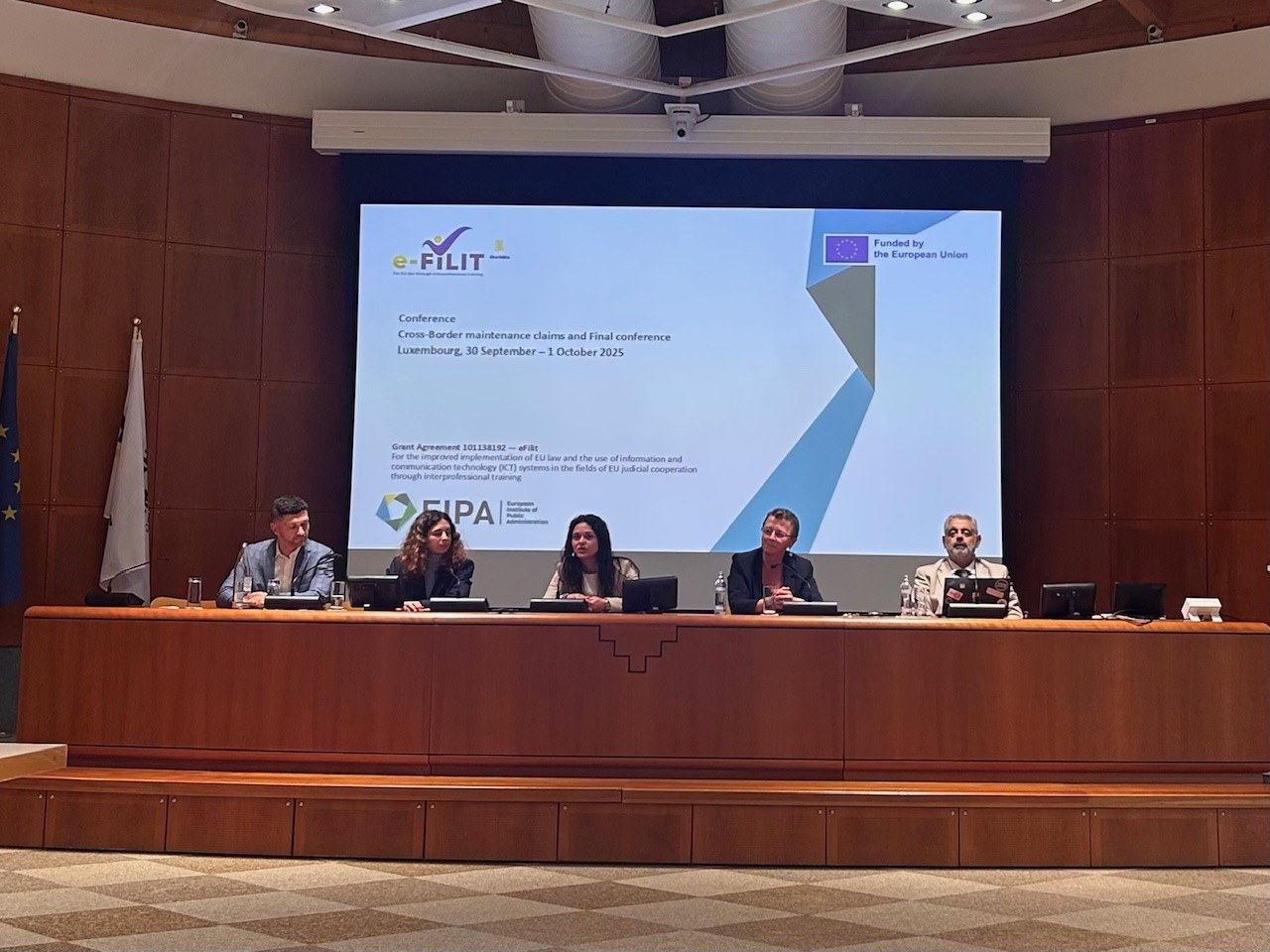
The activities opened in Luxembourg on 30 September and 1 October 2025 with a conference dedicated to cross-border maintenance claims. This meeting, organized within the framework of the e-FILIT project, co-financed by the European Commission and managed by EIPA (European Institute of Public Administration), aimed to analyse in depth the EU Maintenance Regulation and its interaction with international instruments, in particular the 2007 Hague Convention and Protocol.
Throughout the sessions, participants were offered detailed and practice-oriented insights. Discussions focused on the distinction between maintenance obligations and matrimonial property regimes, on the recognition of same-sex couples within the Regulation, and on mechanisms to ensure faster and more effective recovery of maintenance across borders. Carlos Santaló Goris contributed his expertise on provisional and protective measures as well as on the EU instruments available for tracing debtors’ assets. His contributions highlighted the pressing need to make procedures more accessible, efficient, and fit for cross-border realities.
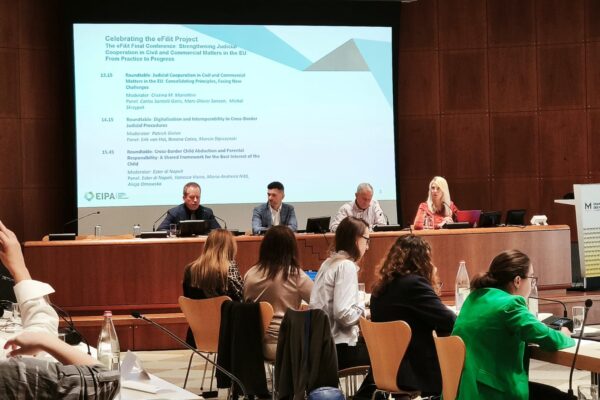
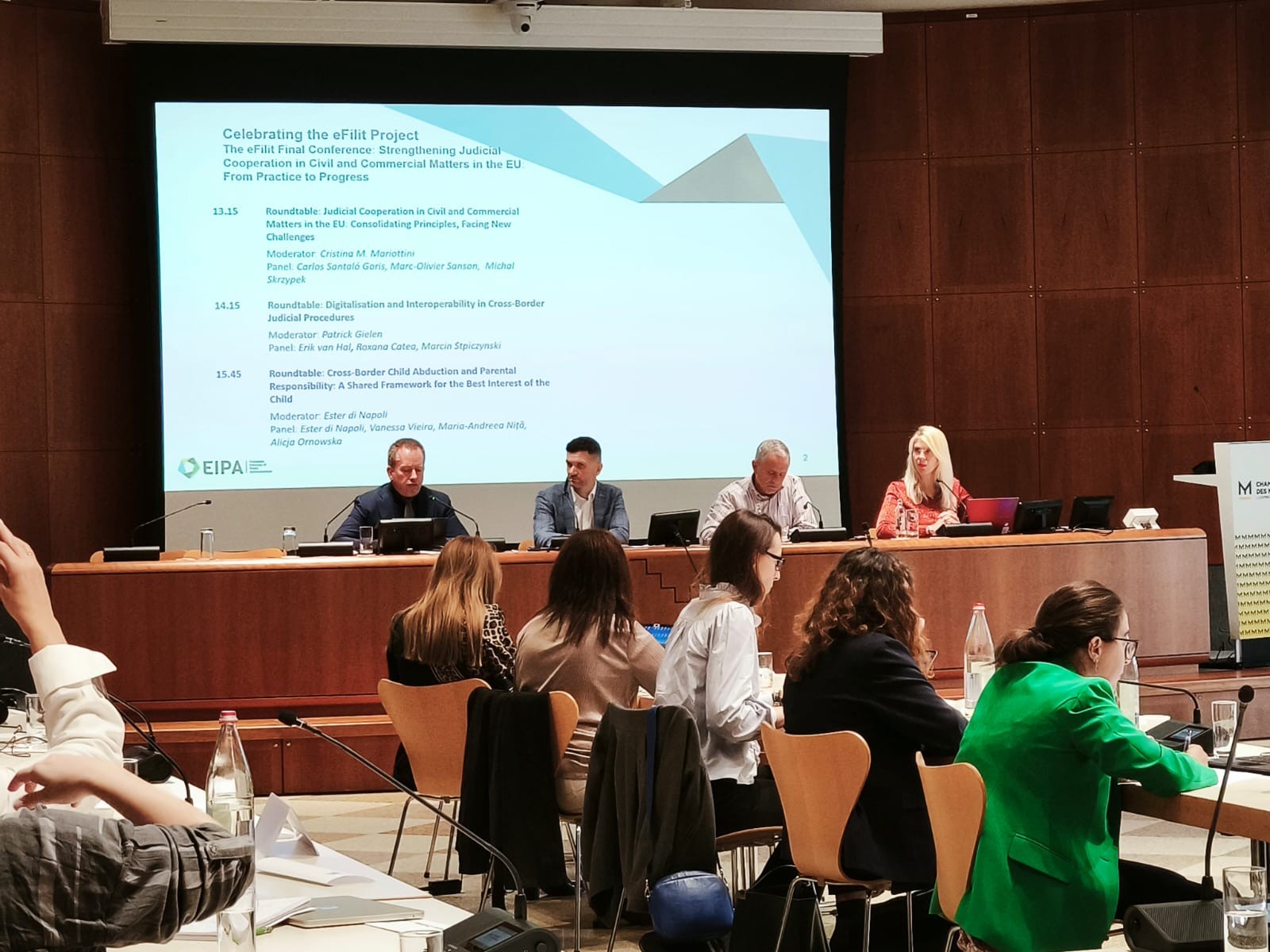
The closing conference of the project took place on the afternoon of 1 October. Entitled Strengthening Judicial Cooperation in Civil and Commercial Matters in the EU: From Practice to Progress, it marked the culmination of two years of training and interprofessional cooperation within e-FILIT. Three roundtables, moderated by Cristina M. Mariottini, Patrick Gielen and Ester di Napoli, provided a comprehensive overview of the project. They addressed progress in civil and commercial judicial cooperation, the challenges of digitalization and interoperability, as well as sensitive issues surrounding international child abduction and parental responsibility.
In conclusion, it was underlined that the UEHJ, as a project partner, contributed directly to the training of around fifty judicial officers from across Europe on the main EU regulations in the field of judicial cooperation. This outcome illustrates the essential role of judicial officers in building a more coherent, accessible and future-oriented European Area of Justice, as well as the importance of institutional partnership and the European Commission’s support in ensuring the success of such initiatives.