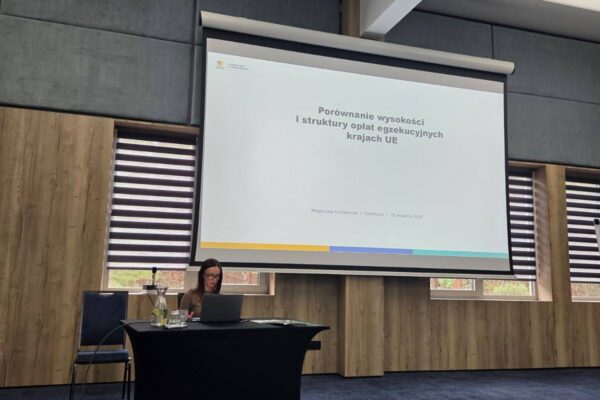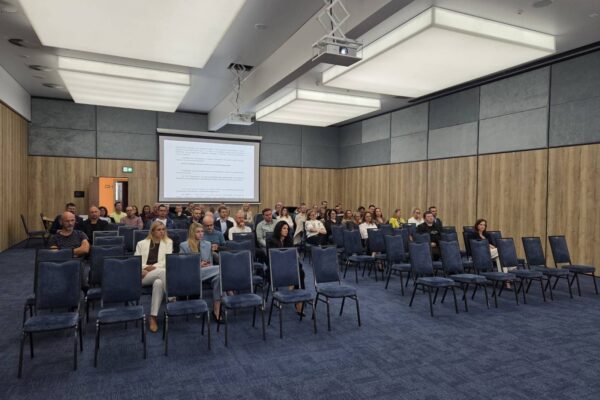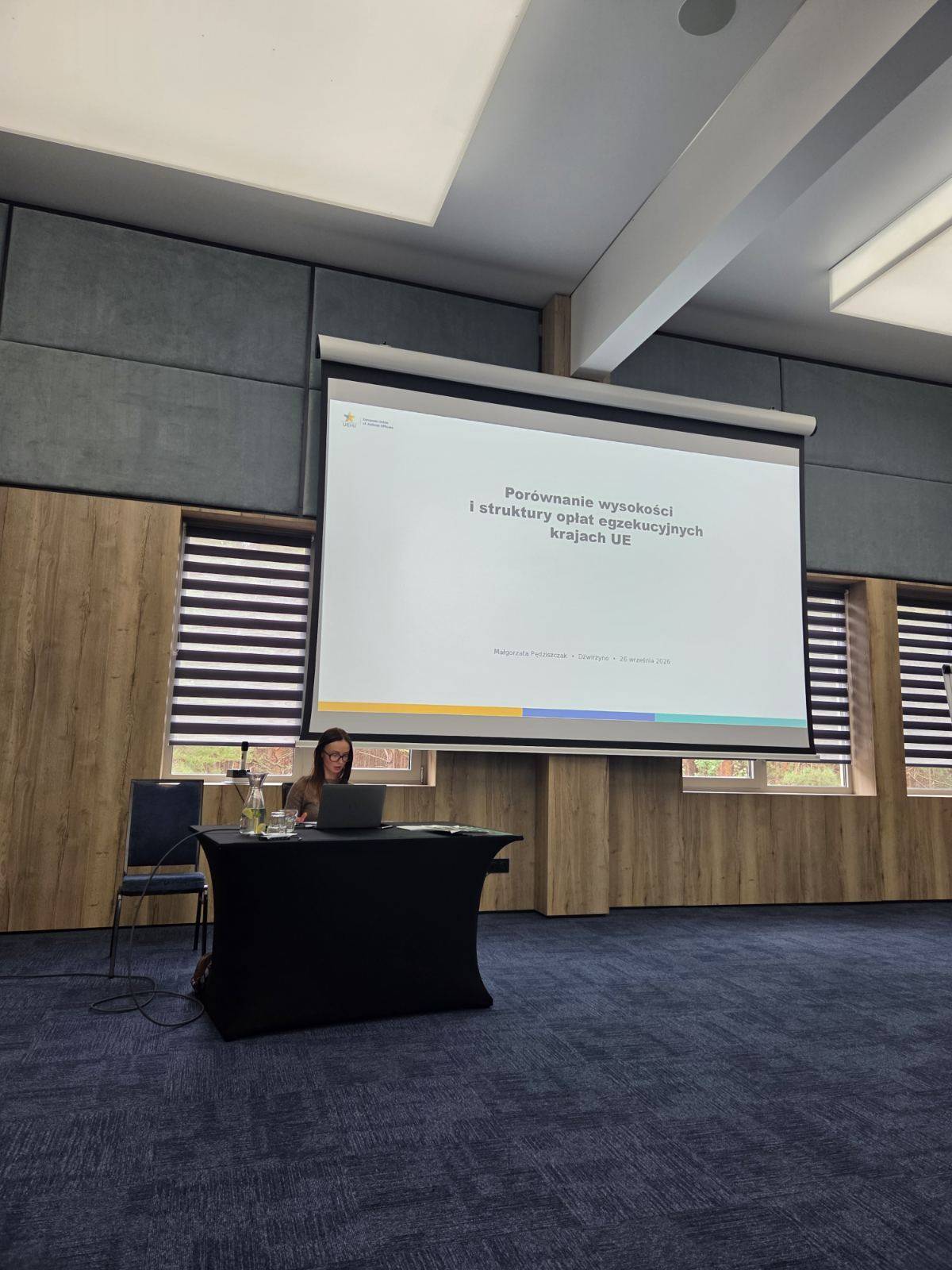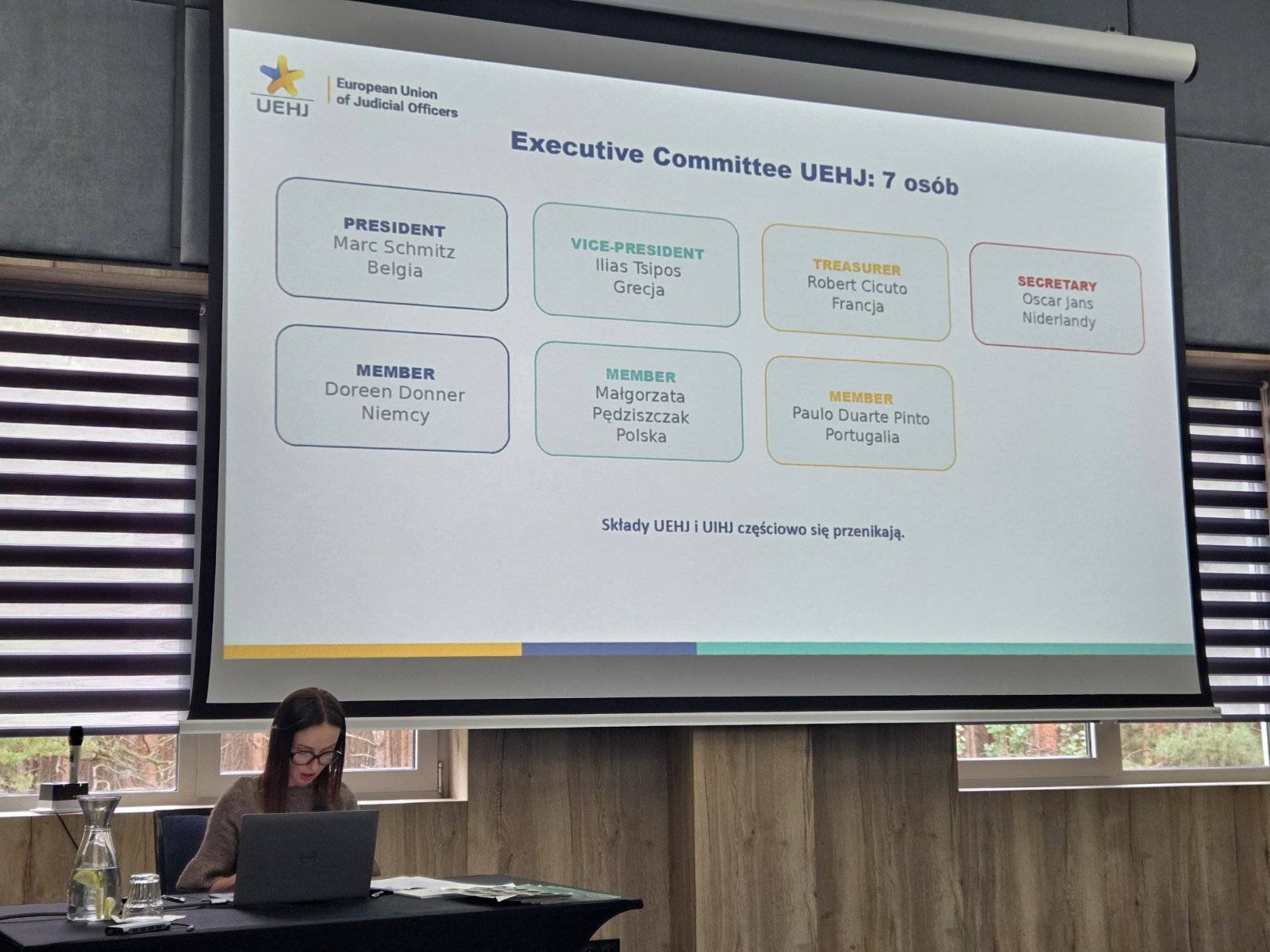
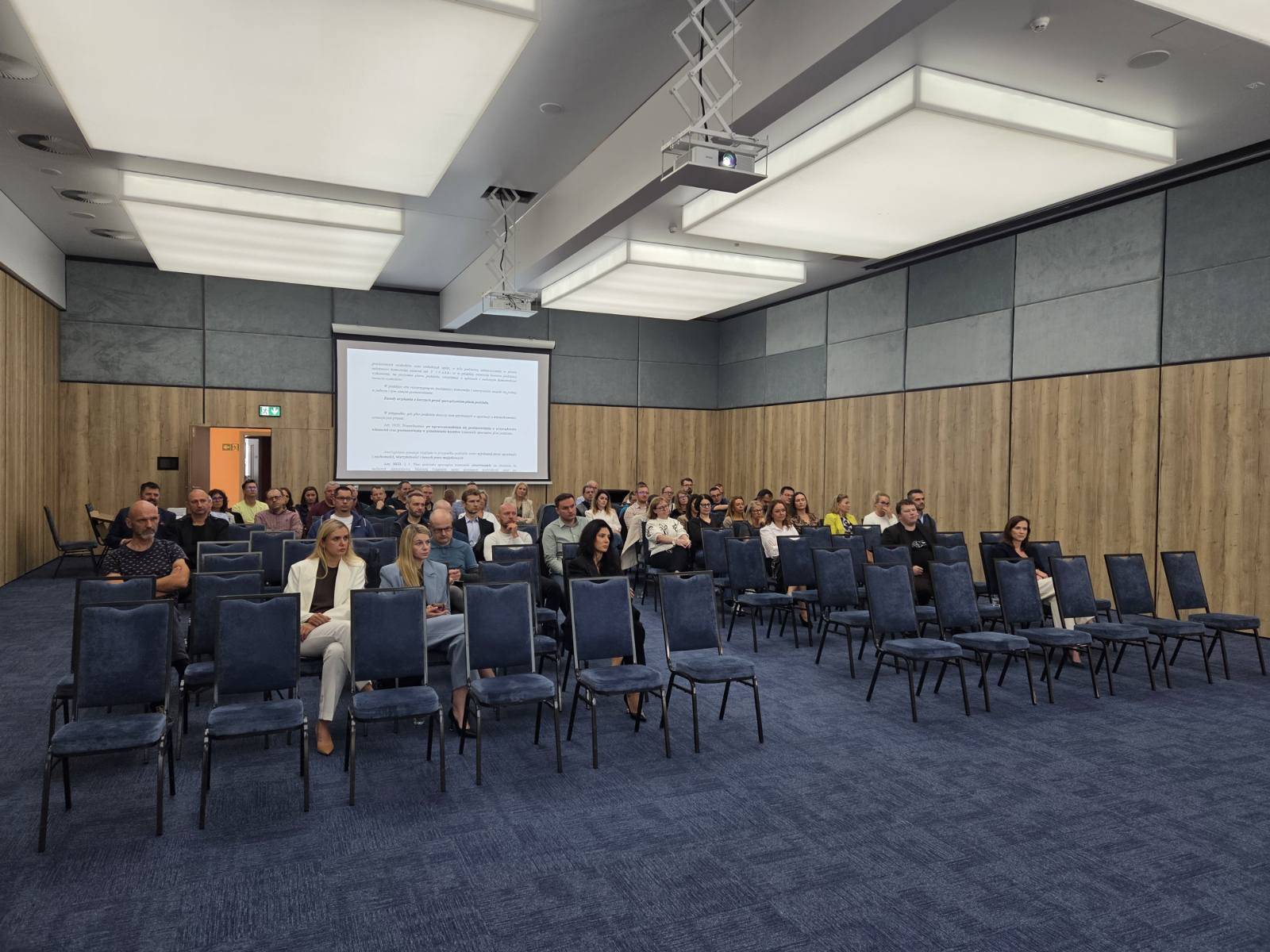
On 26 September 2026, Małgorzata Pędziszczak, member of the Executive Committee of the European Union of Judicial Officers (UEHJ), took part as a speaker in a professional training seminar organised by the Chamber of Judicial Officers in Szczecin and held in Dźwirzyno, Poland.
The event brought together judicial officers and trainee judicial officers from the Szczecin Chamber for a programme devoted to current legal and professional issues.
During her presentation, entitled “Comparison of the level and structure of enforcement fees in European countries”, Małgorzata Pędziszczak presented a comparative overview of different approaches to the financing of enforcement systems across Europe.
Drawing on examples from several European jurisdictions, the presentation highlighted that nominal enforcement fees cannot be meaningfully compared without considering the institutional and economic model behind them. Particular attention was paid to the differences between public, self-financing and mixed models of enforcement, as well as to fixed, proportional, mixed and stage-based fee structures.
The discussion also addressed broader questions concerning the real cost of enforcement: what exactly an enforcement fee finances, who ultimately bears the cost of enforcement, and how the financial risk of unsuccessful enforcement is distributed within different systems. One of the key points was that unsuccessful enforcement does not mean that no professional work has been carried out.
Bringing UIHJ and UEHJ closer to judicial officers
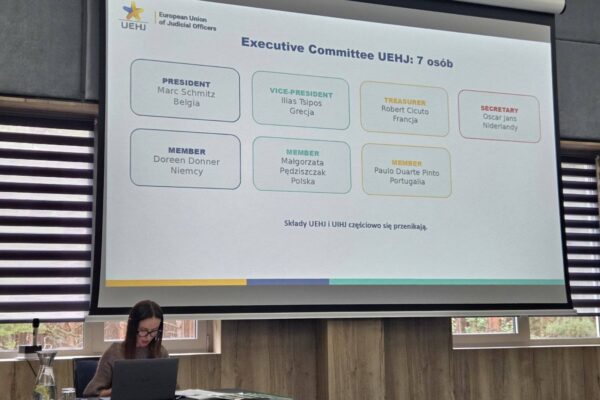
A dedicated part of the presentation was devoted to the International Union of Judicial Officers (UIHJ) and the European Union of Judicial Officers (UEHJ), with the aim of providing participants with a broader understanding of their history, structure, activities and role in representing the profession at European and international level.
The presentation traced the development of the UIHJ from its origins in 1952 to a global professional organisation and explained the functioning of its main bodies. It also presented the development and role of the UEHJ and the close cooperation between the two organisations.
Particular attention was given to the UIHJ’s commitment to the rule of law, access to justice and the right to enforcement, as well as to its cooperation with major European and international institutions.
The presentation also recalled the longstanding involvement of the Polish profession in the UIHJ and highlighted the practical value of international cooperation for judicial officers: exchanging experience, learning from solutions developed in other jurisdictions, contributing to common professional standards and ensuring that the voice of the profession is represented in discussions on the future of enforcement.
The seminar provided an opportunity to bring the work of the UIHJ and UEHJ closer to judicial officers at national level, while underlining the importance of professional exchange and international cooperation in the development of modern enforcement systems.